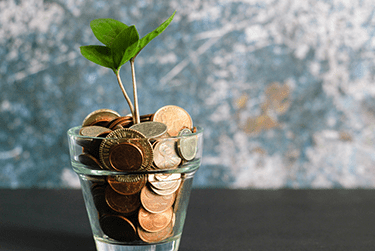
When you graduate college, you come to the first-hand realization that money doesn’t grow on trees. It may sound cliche, and you may have told one of your parents that you know that already, but actually seeing the state of your wallet is a whole other level of understanding. One of the first signs of adulting, in fact, is when you feel like buying some delicious take-out, check your wallet, and tell yourself that there is food at home.
So, as overwhelming as it can be to suddenly feel the weight of financial self-awareness, the first few steps to starting your savings can be simpler than you might expect!
The decision to start managing your finances consciously can be an intimidating first step to building your savings, however, it is a necessary one. Thankfully, it’s not as difficult as it sounds. All it takes are a couple of handy lists and apps that can help you organize your savings into a solid system. Let’s get into it:
Open a bank account
First things first, you need a place to securely place your savings into. A bank account will not only keep it all safe, but banks also provide financial products and loans for loyal customers. There are also other perks to having a good standing with a bank. You can also eventually apply for debit and/or credit cards to make bigger purchases and earn rewards points to get discounts and more savings down the line. To be financially independent, having your first bank account is a must.
Opening a bank account may vary per bank, but you will more or less need the following:
- A valid ID
- Minimum initial deposit
- Bank account application forms
When choosing which bank to place your first savings account into, consider the following:
- For convenience – in case you need a support hub or nearby filing – which bank has the most branches in your area?
- If you were to get a time deposit or credit card, which bank offers the best interest rates for your long-term needs?
Set a monthly budget
The best advice when it comes to saving is to have a set budget for every month. Normally, people pay their bills, buy what they want, and whatever is left will be saved for the month. This method is not only unreliable but can also be a source of a lot of anxiety. You never quite know how much you’re truly spending and, in case you’re having trouble saving up, you won’t be able to tell if the problem stems from your spending habits or your amount of income. If you want a more disciplined approach that takes into account long-term savings, it is safest to always commit a set percentage of your income for the future.
If you are not sure how much you should be setting aside, you can compute 10% of your monthly income and the amount you get will become your staple savings amount per month. Let’s say you earn around P20,000 a month, then you will have to commit to saving P2000 on top of your bill payments and monthly expenses. What is left will be your spending money.
This means 90% goes to your essential spending (bills, set costs, allowance) while the other 10% goes to your investments (bank savings, bonds, insurance, assets).